
Macadamia vs Almond Butter: Which Is Actually Better for You?

If you've made the jump from peanut butter to almond butter, you've already upgraded once. But there's a better upgrade waiting.
Macadamia nut butter is richer in nutrition, better in taste, and a significantly cleaner choice than most almond butters on the market. Here's the honest comparison.
The nutrition breakdown
Both macadamia and almond butter are high in healthy fats, but the type of fat matters enormously.
Macadamia nut butter contains more monounsaturated fatty acids (MUFAs) than any other nut butter, around 75-80% of its fat content. MUFAs are the same heart-healthy fats found in olive oil, linked to reduced LDL cholesterol, lower inflammation, and better cardiovascular health.
Almond butter is also high in MUFAs, but it contains significantly more omega-6 polyunsaturated fats. In isolation, omega-6 isn't harmful, but most Western diets already contain far too much of it relative to omega-3. Adding more through your nut butter isn't ideal.
Macadamia butter is also one of the only dietary sources of omega-7 fatty acids, a rare fat linked to reduced inflammation, improved insulin sensitivity, and better metabolic health. You won't find omega-7 in almond butter.
Almond butter does win on protein, around 7g per 30g serving versus macadamia's 2g. If you're eating nut butter specifically for its protein content, almond butter has the edge. For everything else, macadamia is ahead.
The ingredient reality
This is where things get interesting, and where most almond butters lose.
Walk the nut butter aisle in any UK supermarket and check the labels. The majority of almond butters contain added oils (often palm oil or sunflower oil), added sugar, salt, and emulsifiers to extend shelf life and improve texture.
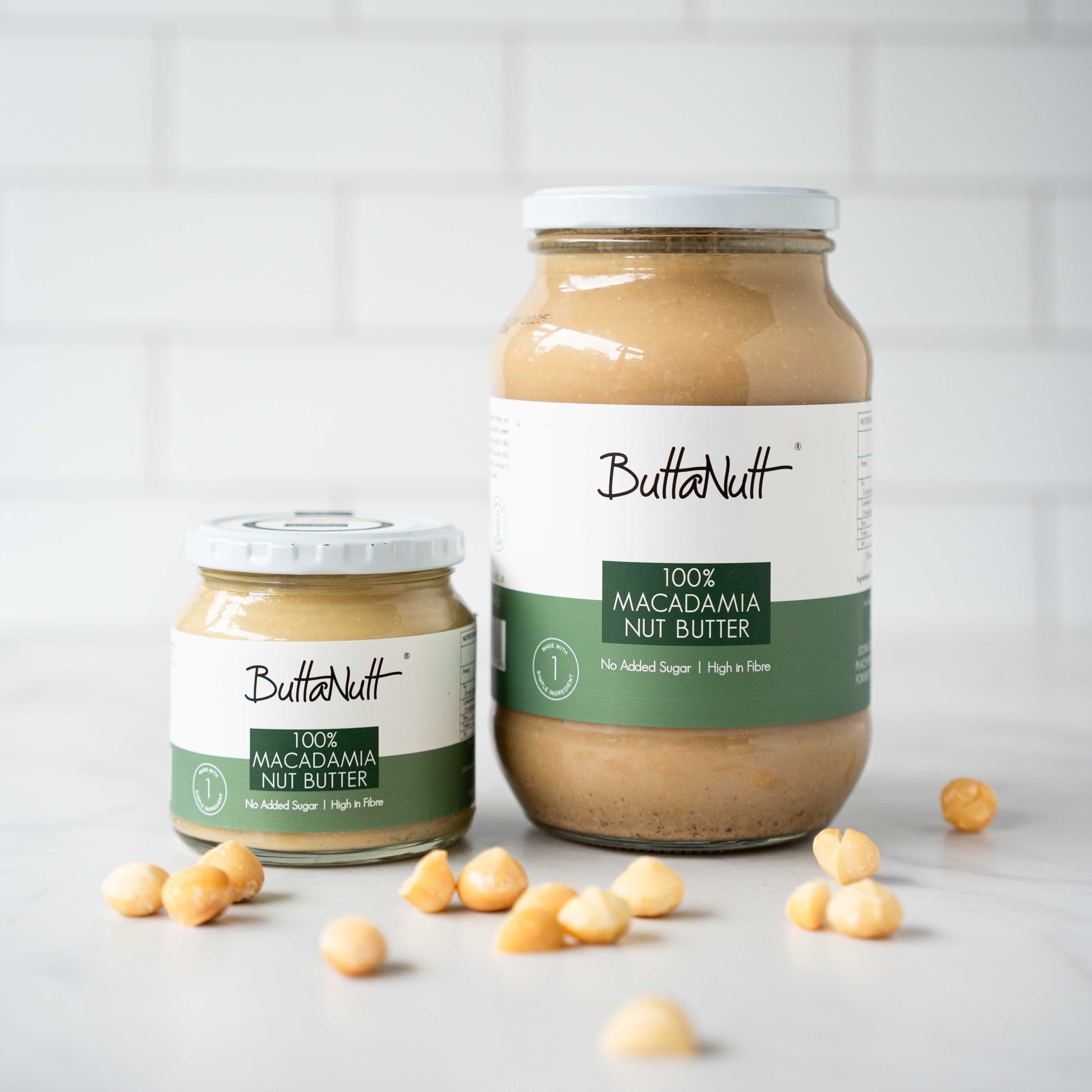
ButtaNutt's macadamia nut butters contain two ingredients at most: dry roasted macadamia nuts, and whatever flavour is added (cinnamon, cocoa, or nothing at all). No palm oil. No preservatives. No refined sugar. No emulsifiers.
If clean-label eating matters to you, macadamia wins by a significant margin, not because almond butter is inherently bad, but because the macadamia category is simply less adulterated.
The taste
Almond butter has a mild, slightly bitter nuttiness. It's pleasant, versatile, and inoffensive, which is also why it can feel a little boring after a while.
Macadamia butter is richer, more naturally sweet, and more indulgent without any added sugar. The natural fat content gives it a depth that almond butter doesn't have. People who try macadamia butter for the first time consistently describe it as tasting more like a treat, which makes it far easier to stick to as part of a daily routine.
The verdict
If you're choosing purely on protein, almond butter wins. On everything else, fat quality, omega-7 content, clean-label credentials, and taste, macadamia is the better choice.
It costs a little more, because macadamia nuts are more expensive to grow and source. But if you're paying attention to what you put in your body, it's worth every penny.
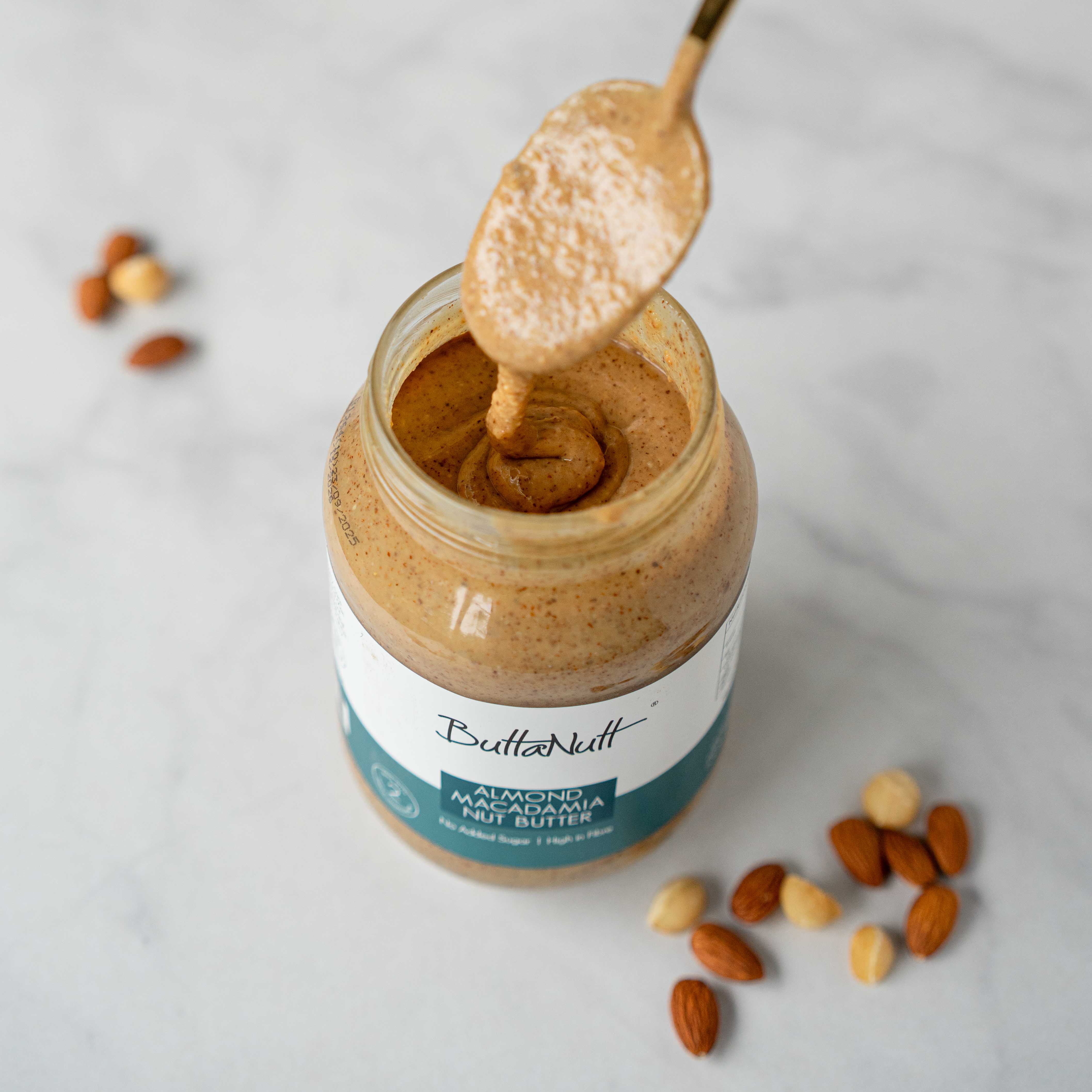
Ready to make the switch? Try ButtaNutt's 100% Macadamia Butter or our Almond Macadamia Butter, the best of both worlds in one jar.
